Industry Knowledge
2026-05-14 10:49:46
What stages are involved in a complete mineral processing workflow?
Complete Mineral Processing Workflow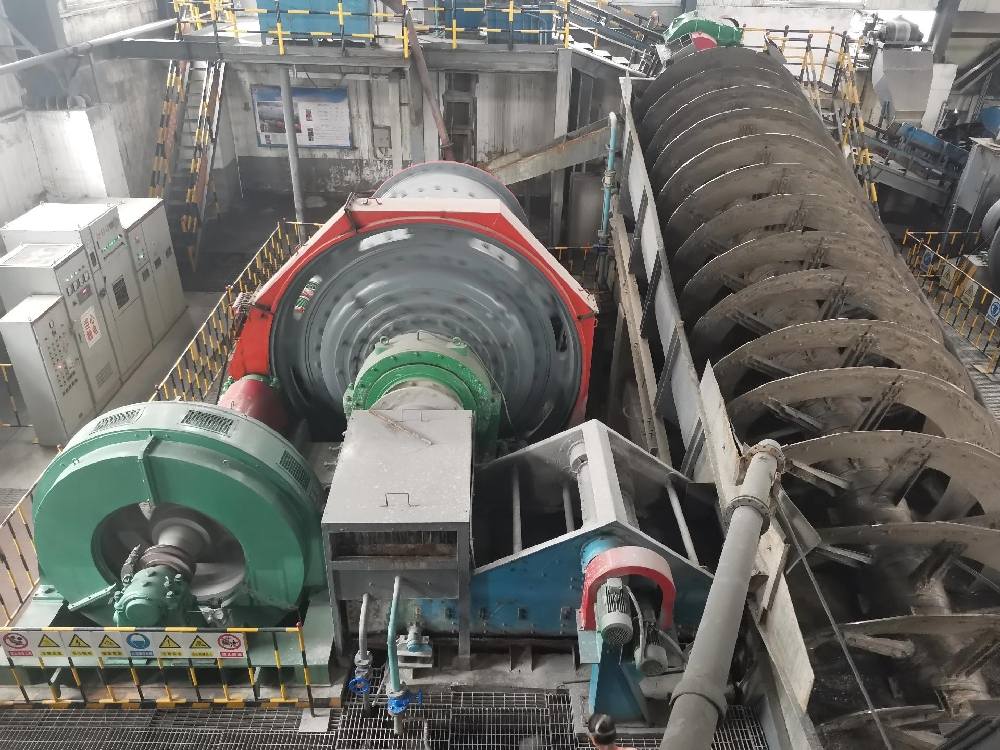
1. **Raw Ore Preparation Stage**
Large lumps of raw ore extracted from the mine are first subjected to preliminary processing: large pieces of waste rock are removed, and surface dirt, weeds, and debris are cleaned off.
2. **Ore Washing Operation**
For ores with high clay content or high viscosity, a water-washing and desliming process is performed to remove muddy impurities, thereby preventing blockages in subsequent crushing and screening equipment.
3. **Multi-Stage Crushing Process**
This process is divided into three steps—coarse crushing, medium crushing, and fine crushing—to progressively break down oversized ore lumps into smaller particles that meet the required feed size for the grinding stage.
* **Common Equipment:** Jaw crushers, cone crushers, and impact crushers.
4. **Screening and Classification**
The crushed ore is passed through vibrating screens; particles of the appropriate size are sent to the next stage, while oversized particles are returned to the crusher for further reduction, establishing a closed-circuit crushing loop.
5. **Grinding Operation**
The screened, fine-grained ore is fed into ball mills or rod mills for grinding. This process reduces the ore to fine sand or a mineral slurry, ensuring the complete liberation and separation of valuable minerals from the waste rock.
6. **Hydraulic Classification**
Using spiral classifiers or hydrocyclones, the ground mineral slurry is separated based on particle size. Coarse sands are returned to the mill for secondary grinding, while the fine-grained, classified slurry proceeds to the mineral separation stage.
7. **Mineral Separation and Purification**
A specific separation process is selected based on the type of ore being processed to isolate valuable minerals from waste rock and gangue.
* **Magnetic Separation:** Used for iron ores and magnetite.
* **Flotation:** Used for multi-metal ores (e.g., gold, silver, copper, lead, and zinc).
* **Gravity Separation:** Used for tungsten, tin, and gold ores (including placer gold).
8. **Product Diversion**
Following separation, the material is divided into three streams: high-grade concentrate, intermediate-grade middlings, and waste tailings. The middlings are returned to the processing circuit for further separation.
9. **Thickening and Sedimentation**
The mineral slurry resulting from the separation stage typically has a low solids concentration; it is therefore fed into a thickener to undergo natural sedimentation, removing the majority of the water and increasing the slurry's concentration. 10. Deep Dewatering of Concentrates
Following the thickening stage, the mineral slurry undergoes further dewatering using filter presses and filtration equipment to reduce the moisture content of the concentrates to industry-standard levels, thereby facilitating their stockpiling, transportation, and smelting.
11. Tailings Treatment
The tailings generated during the beneficiation process undergo sedimentation and dry stacking treatments. This enables the safe storage of tailings, as well as their reuse for backfilling purposes, ensuring that all discharges meet environmental protection standards.
12. Water Recycling
Process water used in mineral beneficiation is centrally collected, subjected to sedimentation and purification, and then recycled back into the production line. This practice conserves water resources and reduces production costs.
13. Overall Process Sequence
Raw Ore Pre-treatment → Ore Washing → Coarse Crushing → Intermediate Crushing → Fine Crushing → Screening → Grinding → Classification → Mineral Separation → Concentrate Thickening → Concentrate Dewatering → Finished Concentrate Product → Tailings Treatment → Wastewater Recycling
chat online
Phone
24-Hour Hotline
Inquire Now

TOP