Industry Knowledge
2026-05-07 11:10:08
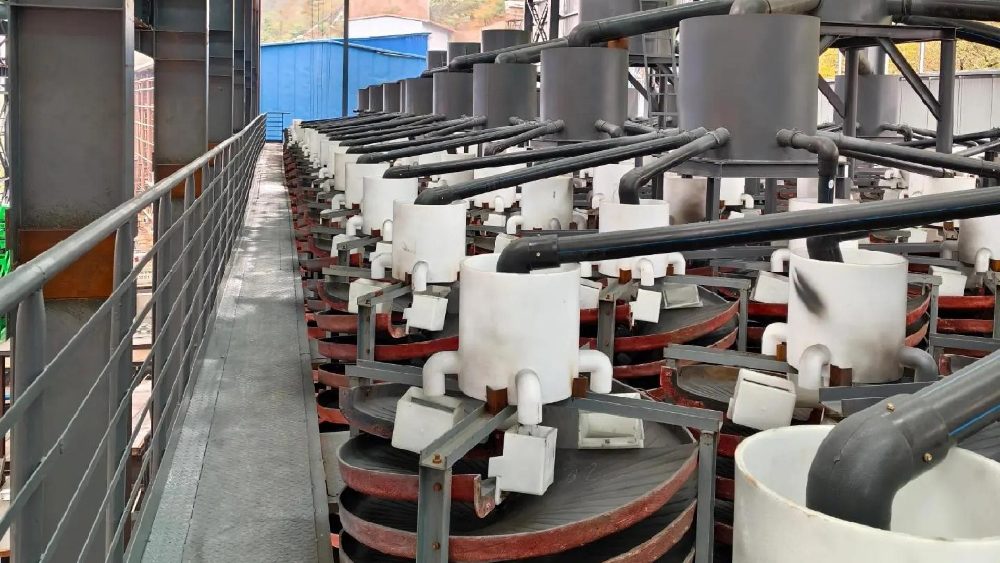
The primary applications of the Overflow Ball Mill include: fine grinding, ultra-fine grinding, the secondary stage of two-stage grinding circuits, processing ores containing clay or those prone to sliming, and ore preparation prior to high-fineness beneficiation. I. Core Principles and Characteristics (Determining the Scope of Application)
**Discharge Method:** The pulp level sits above the discharge trunnion, allowing for natural overflow discharge (no grate plates).
**Grinding Characteristics:**
* **Long material residence time** → Finer and more uniform grinding.
* **High pulp level** → Grinding action predominates; impact action is relatively weak.
* **Simple structure; convenient maintenance.**
**Disadvantages:** Higher risk of over-grinding; throughput is 10%–30% lower than that of grate-type mills.
II. Applicable Particle Size Range
**Target Fineness:** 60%–95% passing -200 mesh (0.074 mm).
**Typical Range:** 0.074–0.2 mm (-200 mesh to +150 mesh).
**Not Suitable For:** Coarse grinding (>0.2 mm); minerals where strict avoidance of over-grinding is required.
III. Applicable Ores and Minerals
**Non-ferrous Metal Ores (Most Common Application)**
* Copper, lead, zinc, molybdenum, nickel, and other sulfide ores (fine grinding prior to flotation).
* Gold and silver ores (ultra-fine grinding prior to cyanide leaching; ≥95% passing -200 mesh).
**Ferrous Metal Ores**
* Hematite, limonite, and magnetite (fine grinding for beneficiation).
**Non-metallic Minerals (Requiring High Fineness)**
* Quartz, feldspar, kaolin, talc, graphite, mica.
* Cement, ceramics, and chemical raw materials (ultra-fine pulverizing).
**Specialty Ores**
* Ores with high clay content or those prone to sliming (less susceptible to clogging).
* Ores with fine-grained dissemination or those difficult to liberate (requiring prolonged fine grinding).
* Concentrate regrinding; tailings re-selection (secondary fine grinding).
IV. Applicable Process Flowsheets
**Two-Stage Grinding** — **Second Stage** (The Mainstream Application)
* **Stage 1 (Grate-type):** Coarse grinding to 0.2–0.3 mm.
* **Stage 2 (Overflow-type):** Fine grinding to 0.074–0.15 mm (feed for flotation / gravity separation).
**Closed-Circuit Grinding** (Requires Classification Equipment)
* Overflow-type Mill + Hydrocyclone / Spiral Classifier
Classification and Return Sand (Coarse Particles) Regrinding: Ensures product fineness and minimizes over-grinding.
Single-Stage Fine Grinding Process
Small-scale beneficiation plants, easily grindable ores, and direct fine grinding (single-stage closed circuit).
Concentrate / Tailings Regrinding
Enhances concentrate grade and recovers fine-grained valuable minerals.
V. Typical Application Scenarios (Industries)
Mineral Processing Plants: Fine grinding operations for non-ferrous metals, precious metals, and iron ores.
Non-metallic Mineral Deep Processing: Ultra-fine grinding for quartz and kaolin (finer than -325 mesh).
Chemicals / Building Materials: Wet fine grinding for paints, pigments, and ceramic raw materials.
New Energy Materials: Micro-powder preparation for lithium iron phosphate and graphite anodes.
chat online
Phone
24-Hour Hotline
Inquire Now

TOP