Industry Knowledge
2026-06-18 10:03:40
I. Differences in Purpose and Function
**First-stage Grinding (Coarse Grinding)**
Grinds run-of-mine ore or crushed ore to a particle size suitable for preliminary liberation; the goal is to separate the majority of valuable minerals from gangue, without requiring ultra-fine grinding.
Primarily supplies feed for subsequent roughing and pre-concentration operations; handles the vast majority of the plant's total raw ore throughput; characterized by high-capacity coarse grinding.
Typically operates in a closed circuit with classification equipment; material meeting the target size proceeds directly to separation stages (such as flotation), while coarse particles are returned for regrinding.
**Second-stage Grinding (Fine Grinding)**
Performs further fine grinding on rough concentrates and middlings from the first stage to fully liberate composite mineral particles (intergrowths) embedded in gangue, thereby improving concentrate grade and recovery rates.
A fine-grinding operation preceding the cleaning stage; throughput is significantly lower than that of the first stage; the core objective is fine grinding for liberation.
Rarely processes raw ore directly; instead, it processes intermediate products resulting from the first stage of separation.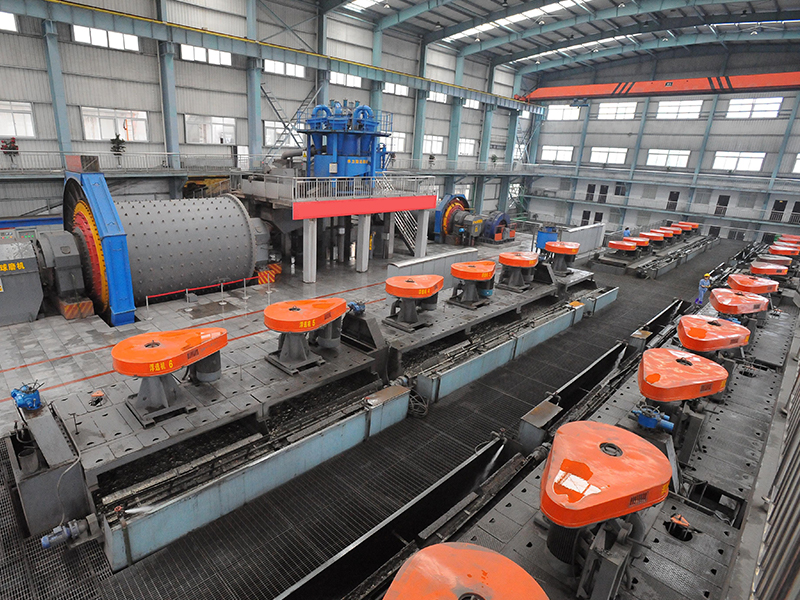
II. Differences in Feed Size and Product Size
**First-stage Grinding**
Feed: Coarse ore particles (10–25 mm) after crushing.
Product: Typically coarse (approx. 0.2–0.5 mm); size needs only to satisfy roughing requirements.
**Second-stage Grinding**
Feed: Rough concentrates and middlings from the first stage (already in the form of fine-particle slurry).
Product: Often 0.074 mm (200 mesh) or finer; meets liberation requirements for cleaning stages.
III. Equipment Configuration and Process Characteristics
**First-stage Grinding**
Frequently employs grate-discharge ball mills; features rapid discharge, high throughput, and minimal over-grinding; suitable for high-capacity coarse grinding operations.
Almost exclusively utilizes closed-circuit grinding (ball mill combined with spiral classifier or hydrocyclone) to ensure a consistent feed of correctly sized material to flotation.
Operates at relatively high grinding pulp density (65%–75%); offers high grinding efficiency and lower energy consumption per ton of raw ore. Second-stage grinding
Typically employs overflow-type ball mills; suitable for fine grinding with pulp discharge via overflow, allowing for longer residence times;
Generally operates in a closed circuit to prevent over-grinding of fine particles, which could lead to slime formation;
Grinding pulp density is slightly lower than in the first stage to avoid reduced classification efficiency caused by excessive pulp concentration;
Higher energy consumption per unit of ore, primarily due to the energy required for fine grinding and mineral liberation.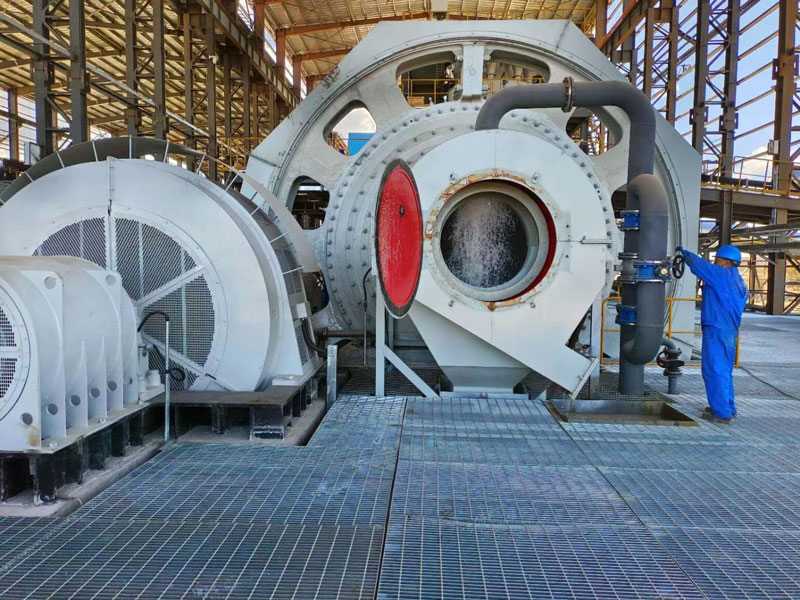
IV. Position in the process flow
First-stage grinding circuit: Run-of-mine ore → Crushing → First-stage ball milling + Classification → Rougher flotation (roughing and scavenging)
Second-stage grinding circuit: First-stage rougher concentrate / Middlings → Second-stage ball milling + Classification → Cleaner flotation
chat online
Phone
24-Hour Hotline
Inquire Now

TOP