Industry Knowledge
2026-08-20 13:41:14
Reasons why coarse-grained minerals are difficult to float
Coarse particles do not remain suspended easily in the flotation machine, reducing the probability of collision with air bubbles;
Once attached to bubbles, coarse particles are prone to detachment due to their high weight and the strong detachment forces acting upon them;
Flotation performance for coarse particles is poor under conventional process conditions.
Process measures to improve coarse-particle flotation performance
Reagent adjustment: Employ collectors with strong collecting capabilities; supplement with auxiliary collectors like kerosene or diesel to enhance coarse-particle collection, improve particle-bubble adhesion and attachment strength, and reduce the probability of particle detachment.
Pulp and agitation regimes: Appropriately increase pulp density to enhance pulp buoyancy; apply moderate agitation—while maintaining a stable froth layer—to increase opportunities for coarse particles to collide with and attach to bubbles.
Increase aeration rate: Moderately increase the aeration rate in the flotation machine to generate bubble clusters comprising both large and small bubbles; these clusters possess greater buoyancy, enabling them to carry coarse particles upward.
Select suitable flotation equipment: Use shallow-tank flotation machines to shorten the ascent distance for mineralized bubbles, thereby reducing particle detachment; alternatively, select specialized flotation machines designed for coarse-particle separation.
Optimize the froth scraping mechanism: Use a fast and smooth scraping device to promptly remove floated mineralized froth, preventing coarse particles from detaching and falling back into the pulp.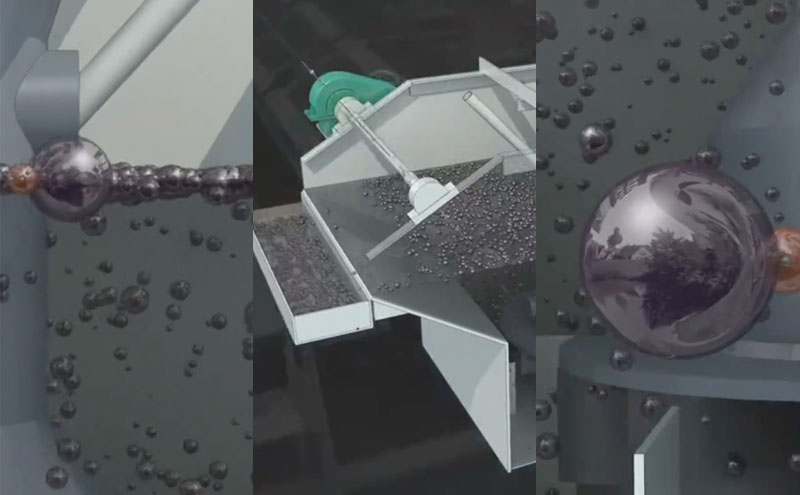
chat online
Phone
24-Hour Hotline
Inquire Now

TOP