Industry Knowledge
2026-09-16 16:03:38
Once the material enters the mill from the feeder via the feed pipe, the slurry level inside the mill shell rises above the level of the discharge pipe’s inner diameter (specifically, above the line corresponding to the pipe's lowest internal element), allowing the ground material to exit the mill through the discharge pipe. In the design of this type of mill, the end of the discharge pipe—located within the hollow trunnion of the discharge-end cover—is shaped like a trumpet (flared). Additionally, an annular retaining ring is typically installed at the base of the hollow trunnion to prevent any slurry leaking from the end-cover bolt holes from entering the bearings. Furthermore, a spiral (helical) flight is cast into the discharge pipe; its orientation is opposite to the direction of the mill's rotation, which serves to prevent steel grinding media and ore particles from being discharged along with the slurry. However, this type of mill has a relatively low production capacity per unit volume and is prone to over-grinding. Because the ore remains in the mill for a longer duration and undergoes more thorough grinding, the resulting product has a finer particle size. Consequently, this type of mill is generally used for stage grinding—specifically for the regrinding of concentrates—to achieve a finely-sized, high-quality product.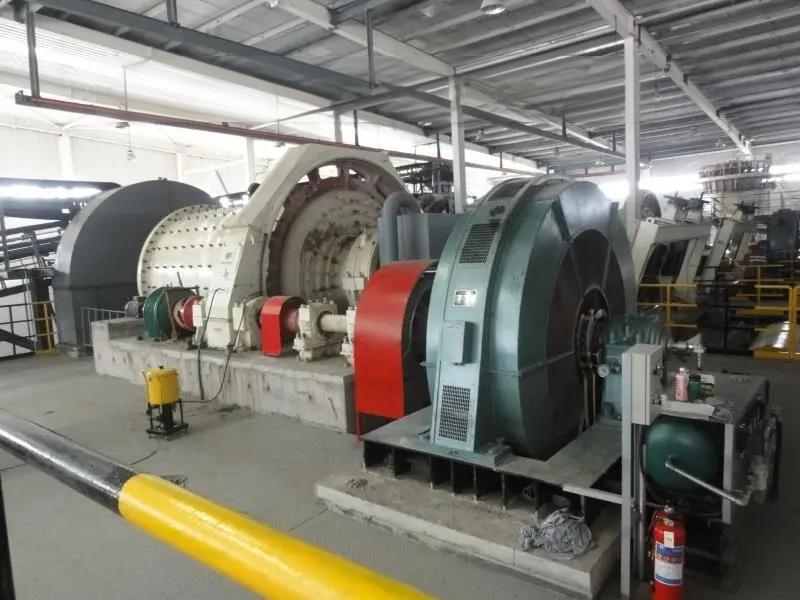
chat online
Phone
24-Hour Hotline
Inquire Now

TOP