Industry Knowledge
2026-05-19 10:16:16
Ball Mills vs. Rod Mills: A Comprehensive Comparison (Specialized for Mineral Processing & International Trade)
I. Structure and Grinding Media
Ball Mill
The mill cylinder is charged with solid steel balls, available in a wide variety of sizes; the spherical shape results in point-contact grinding.
Rod Mill
The mill cylinder is charged with cylindrical steel rods, with rod lengths closely approximating the length of the cylinder; this configuration results in line-contact grinding.
II. Grinding Principle
Ball Mill: Relies on the impact, collision, and rolling action of the steel balls to crush materials, generating significant impact force.
Rod Mill: Relies on the squeezing and attrition (rubbing) action between the steel rods to crush materials, exerting a force that is gentle and uniform.
III. Discharge Particle Size and Shape
Ball Mill
Produces a fine discharge particle size, capable of grinding materials down to a fine powder; however, it frequently exhibits over-grinding, resulting in an excessive amount of fines and non-uniform particle sizes.
Rod Mill
Produces a uniform and consistent discharge particle size with minimal over-grinding; the resulting particles are rounded and regular in shape, characterized by a higher proportion of coarse particles and fewer fines. IV. Feed Particle Size
Ball Mill: Handles relatively fine feed; suitable for secondary (fine) grinding.
Rod Mill: Can accept larger feed lumps; suitable for primary (coarse) grinding.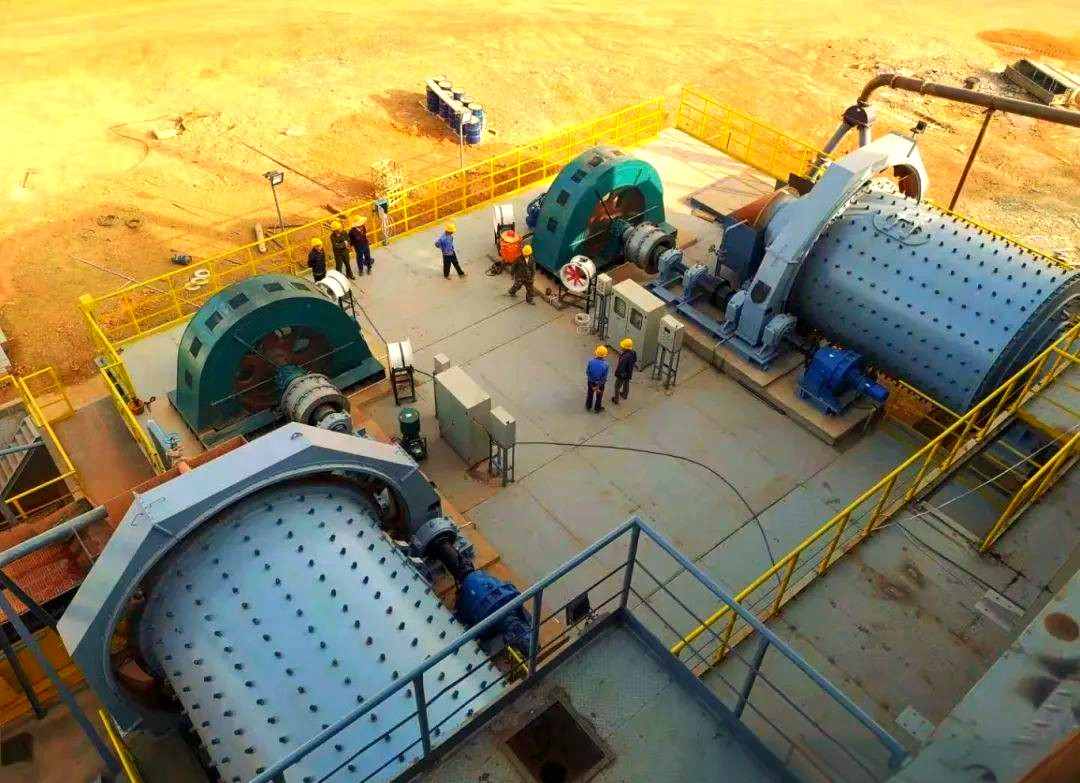
V. Applicable Industries and Materials
Ball Mills Are Suitable For:
Beneficiation and grinding of metal ores (gold, silver, copper, iron, tin, etc.)
Grinding of cement, ceramics, and refractory materials
Fine grinding of tailings, powder processing, and wet beneficiation
Production lines requiring the output of fine powder materials
Rod Mills Are Suitable For:
Production of machine-made sand and stone aggregates; high-standard construction sand
Production of sand from quartz, silica, and glass raw materials
Beneficiation of brittle ores (tungsten, tin, etc.) where over-grinding must be prevented
Coarse grinding and sand production in sand washing plants and stone quarries
Process flows designed to avoid excessive pulverization of materials
VI. Production Output and Energy Consumption
(For units of the same model and power rating): Rod mills offer higher hourly output and greater production efficiency.
(Under fine grinding conditions): Ball mills demonstrate efficiency far superior to that of rod mills.
Rod mills operate with lower noise levels and exhibit more uniform wear.
VII. Comparison of Advantages and Disadvantages
Ball Mill
Advantages: High grinding fineness, wide range of applications, excellent results in ultra-fine grinding, comprehensive range of available models.
Disadvantages: Prone to severe over-grinding; finished sand contains a high proportion of fine powder; lacks coarse particles.
Rod Mill
Advantages: Uniform discharge, excellent particle shape, low fine powder content, high output, wear-resistant and durable.
Disadvantages: Incapable of grinding ultra-fine powders; cannot achieve the fineness standards typically met by ball mills.
VIII. Process Flow Configurations
Standard Configuration for Beneficiation Plants:
Jaw Crusher → Cone Crusher → Rod Mill (Coarse Grinding) → Ball Mill (Fine Grinding) → Flotation / Magnetic Separation
Configuration for Sand Making Plants:
Crusher → Rod Mill → Screening (Direct output of premium finished sand)
IX. A Simple Rhyme for Model Selection
For beneficiation requiring fine powders and high fineness standards → Use a Ball Mill
For producing premium sand, preventing over-grinding, and ensuring uniform particles → Use a Rod Mill
chat online
Phone
24-Hour Hotline
Inquire Now

TOP