Industry Knowledge
2026-06-12 10:19:28
Comprehensive Energy-Saving Plan for the Grinding Process (Applicable to mineral processing plants; suitable for direct technical presentations to overseas clients)
I. Pre-treatment of Feedstock: Reducing Mill Load at the Source (Most Significant Energy-Saving Impact)
Intensify crushing to reduce feed particle size
Adhere to the "crush more, grind less" principle; the finer the crusher discharge, the less work the mill performs.
For conventional rod/ball mills, control feed size to 8–15mm; use cone crushers or high-pressure grinding rolls (HPGR) for fine crushing to reduce feed size to 6–10mm, directly cutting power consumption by 10%–25%.
Remove fine slimes and dust via pre-screening so that fine material does not enter the mill and waste energy.
Pre-removal of slimes and waste rock (dry or wet methods)
Soil and wall rock have no mineral processing value but consume grinding energy; use pre-washing or dense-medium separation to discard waste early and reduce the volume of unproductive grinding.
Ensure uniform feeding; prevent feed interruptions or surges
Unstable feeding leads to idling (wasted energy) or mill blockages and overloads; install variable-frequency feeders and buffer bins to stabilize the feed rate.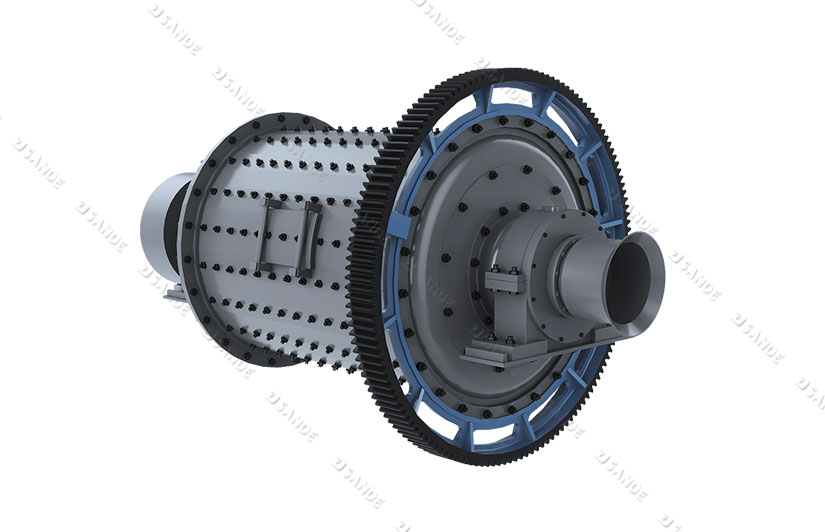
II. Optimization of Grinding Equipment
1. Optimization of the match between liners and grinding media (steel rods/balls)
Liners: Switch to wave-profile or stepped liners to improve lifting action, reduce sliding wear, and enhance grinding efficiency; replace old, smooth liners that suffer from low efficiency and high energy consumption.
Media mix/grading:
Rod mills: Match rod diameters to feed particle size to avoid ineffective collisions caused by excessively large or small rods; regularly replenish rods and remove broken ones.
Ball mills: Optimize the size distribution of steel balls to ensure a combination of impact breakage and attrition grinding; maintain media filling rates between 35% and 42%, as energy consumption spikes if rates are too high or too low.
Media material: Use highly wear-resistant alloy steel rods/balls; reduced wear rates mean less frequent replenishment and more stable grinding slurry density. 2. Energy-saving upgrades for rotational speed and drive systems
Match the rotational speed to 75%–82% of the critical speed; speeds that are too high cause slippage, while speeds that are too low result in insufficient impact force—both increase specific energy consumption. Retrofit existing fixed-speed motors with variable frequency drives (VFDs) to adjust speed in real-time based on ore hardness.
Drive system maintenance: Regularly lubricate reducers, couplings, and bearings to eliminate frictional losses. Replace outdated belt drives with rim drives or permanent magnet direct-drive motors; the motors themselves offer energy savings of over 15%.
3. Optimization of closed-circuit classification (reducing over-grinding and circulating load)
Closed-circuit grinding and classification is the core of energy reduction:
Optimize pressure and slurry concentration in spiral classifiers and hydrocyclones to ensure timely discharge of fine particles that meet specifications, thereby reducing the volume of compliant material repeatedly returned to the mill.
Maintain the circulating load within a reasonable range (typically 150%–300%); excessive circulating load implies repeated grinding of material, which doubles energy consumption.
For tungsten, tin, and gold ores prone to slime formation, prioritize open-circuit coarse grinding using rod mills to avoid the energy waste associated with over-grinding fine slimes in the circulating load.
III. Precision control of grinding process parameters
Grinding concentration control
Optimal concentration for wet grinding: 65%–75% for ball mills and 70%–80% for rod mills. Excessively low concentration results in slurry that is too dilute, reducing grinding media impact efficiency; excessively high concentration makes the slurry viscous with poor fluidity, drastically lowering grinding efficiency and increasing specific energy consumption.
Avoiding over-grinding
Strictly prevent excessive fine grinding for gravity-recoverable ores (gold, tungsten, tin, tantalum-niobium). Over-grinding produces fine slimes, leading to both metal loss and wasted electrical energy. Employ a two-stage grinding process—coarse grinding with rod mills followed by fine grinding with ball mills—to achieve staged liberation rather than grinding to ultra-fine sizes in a single step.
Pre-treatment of ore: temperature adjustment and dry/wet separation
Frozen or damp, clumped ores are difficult to grind; pre-dry and break up such ores to reduce resistance during milling. IV. Energy Conservation through Electrification and Automation
Replacement of traditional asynchronous motors with energy-efficient permanent magnet synchronous motors yields significant power savings under both no-load and loaded conditions;
Fully automated system: Integration of online concentration monitors, particle size analyzers, and variable-frequency feeders enables automatic adjustment of feed rates, water addition, and rotational speeds, eliminating parameter imbalances caused by manual operation;
Mill no-load protection: Automatic speed reduction upon loss of feed prevents energy waste from idling.
V. Consumption Reduction through Management and Maintenance (Low-Cost, High-Impact)
Regular mill clearing: Removal of broken steel rods, grinding balls, and debris; ineffective media occupy mill volume and reduce the effective grinding space;
Segregated grinding: Separate stockpiling and grinding of soft and hard ores; hard ores require specific adjustments to grinding media and rotational speed, whereas mixed grinding forces higher energy consumption;
Elimination of leaks and spills: Slurry pipeline leaks and uncontrolled classification overflows reduce actual effective throughput, leading to artificially high specific energy consumption.
chat online
Phone
24-Hour Hotline
Inquire Now

TOP