Industry Knowledge
2026-06-12 10:11:54
1. Metal Mine Ores (Key Advantage: Minimal over-grinding; suitable for gravity separation/magnetic separation)
Rod mills utilize line-contact crushing, which preferentially breaks down coarse particles while preventing fine mineral grains from being over-ground into sludge. This significantly boosts metal recovery rates in gravity separation processes, making them the standard primary grinding equipment for tungsten, tin, and rare metal ores. 1. Recommended Applications (Best Fit)
Tungsten and Tin Ores (Wolframite, Cassiterite): Essential for gravity separation processes; prevents over-grinding into fine slimes (which causes loss); the standard primary coarse grinding equipment for global tungsten and tin processing plants.
Gold Ore (Lode Gold, Placer Gold): Used for coarse grinding and pre-dissociation, paired with shaking tables and jigs for gravity separation; rod mills are commonly used for the initial coarse grinding stage.
Rare Metal Ores (Tantalum-Niobium, Zircon, Monazite, etc.): Suitable for brittle, high-value minerals where the generation of fine slimes must be strictly controlled.
Magnetite and Hematite: Used for primary coarse grinding in magnetic separation plants; produces uniform particle sizes that enhance magnetic separation efficiency.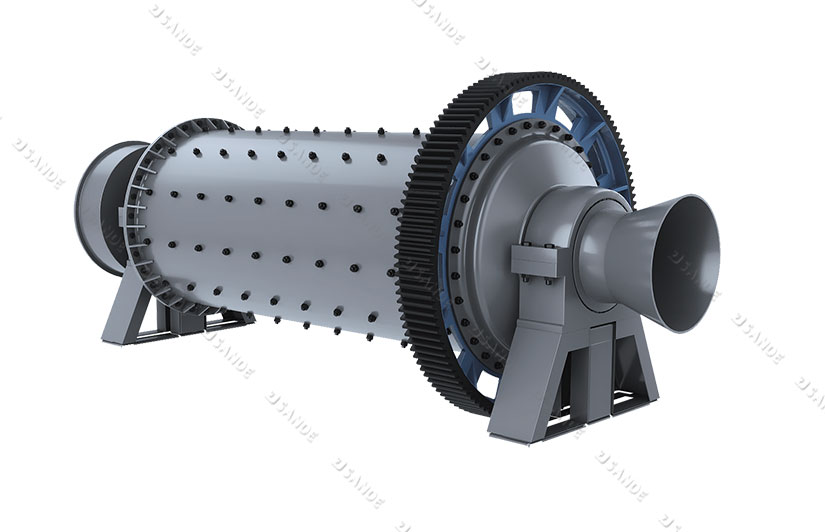
2. Standard Metal Ore Applications
Copper, Lead-Zinc, Manganese, Molybdenum, and Antimony Ores: Primarily used for single-pass open-circuit coarse grinding (product size 1–3 mm) prior to fine grinding and flotation in a ball mill.
II. Non-metallic Ores / Rocks (Sand Making, Construction Materials, Quartz Raw Materials)
Suitable for medium-hard to hard rocks (Mohs hardness 5.5–12); produces rounded particles with uniform gradation; serves as an alternative to cone crushers for fine crushing and sand making.
Quartz / Silica: Used for producing glass sand and foundry sand; yields regular particle shapes with minimal fines.
Hard Rock Sand Making: Pebbles, river stones, granite, basalt, andesite.
Limestone and Dolomite: Coarse crushing for construction aggregates and lime raw materials.
Steel Slag and Tailings: Re-grinding of iron ore tailings and metal slag for recovery.
III. Ores Unsuitable for Rod Mills
Materials requiring ultra-fine grinding (<0.1 mm): Ball mills are preferred.
Extremely soft, highly sticky, or clay-rich ores (very high clay content): Prone to sticking to rods and causing blockages.
Single-stage fine grinding processes for flotation that require a high proportion of fines.
IV. Key Selection Logic
Process involves gravity separation or magnetic separation (Tungsten, Tin, Lode Gold, Tantalum-Niobium) → Rod mill is the mandatory choice.
Feed size 15–30 mm; product size... 0.5–5 mm size range, requiring uniform particles and minimal fine sludge → Rod mill
Fine feed, requiring grinding to below 200 mesh for flotation → Ball mill is more suitable
chat online
Phone
24-Hour Hotline
Inquire Now

TOP