Industry Knowledge
2026-08-10 17:13:04
Newly installed or overhauled grinding mills must undergo a trial run before being put into production. The trial run generally consists of three stages: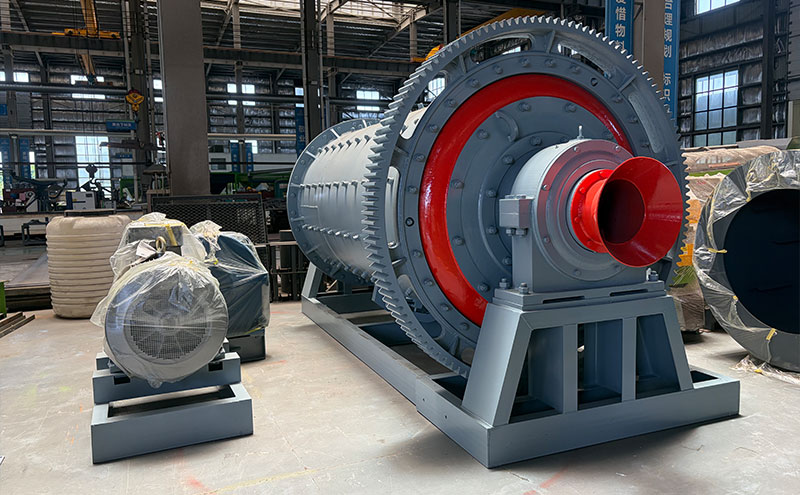
(1) Pre-trial run preparation. This primarily involves inspecting the motor, electrical components, and the tightness of all fasteners; checking the integrity of lubrication and sealing systems; manually rotating the mill (inching); and checking for any abnormalities.
(2) No-load trial run. After manual rotation reveals no abnormalities, the mill is started without a load (i.e., without grinding media or material) and operated continuously for 8–16 hours. It must meet the following requirements: lubrication points function normally without oil leakage; main bearing temperature does not exceed 50°C; operation is smooth with no abnormal noise; and no components show signs of loosening.
(3) Load trial run. This is conducted in two stages: 1) Half-load trial run: The media filling rate (φ) is set to 25%–30%, and appropriate amounts of material and water are fed (intermittently) while the mill operates for 8–10 hours. 2) Full-load trial run: After confirming normal operation during the half-load run, the media charge is brought to the full level, the ore feed rate is appropriately increased, and the mill operates at full load for 10–20 hours. Finally, it must meet the following requirements: smooth operation without abnormal noise; main motor current fluctuates within permissible limits; temperatures remain below the allowable rise; lubrication is normal throughout; main bearing temperature does not exceed 60°C; and there is no leakage of ore, water, or oil.
chat online
Phone
24-Hour Hotline
Inquire Now

TOP