
Industry Knowledge
2026-08-26 09:06:14
What are the importance and requirements regarding molybdenum ore fineness in the flotation process?
Production practice demonstrates that flotation performance varies depending on mineral particle size. Flotation results for both coarse and fine particles tend to be poor; even if the minerals have achieved liberation, recovery rates remain low. Furthermore, froth products can become coated with ultrafine particles, negatively affecting concentrate grade.
Each specific ore type has an optimal particle size range for flotation. Therefore, determining the appropriate grinding fineness is crucial for achieving superior technical and economic results. To ensure optimal flotation performance, the grinding fineness must meet the following requirements:
Achieve substantial liberation of valuable minerals
Only a minimal amount of composite particles (intergrowths of valuable and gangue minerals) should remain prior to flotation.
Bring mineral particles within the optimal size range for flotation
For the flotation of non-ferrous sulfide ores, the feed particle size generally should not exceed 0.2–0.3 mm. Coarse particles are heavy, making them difficult for air bubbles to lift and prone to detaching from the bubbles.
Minimize slime formation
Flotation performance drops significantly when particle diameters fall below 0.01 mm; at sizes smaller than 2–5 microns, separating valuable minerals from gangue minerals becomes nearly impossible.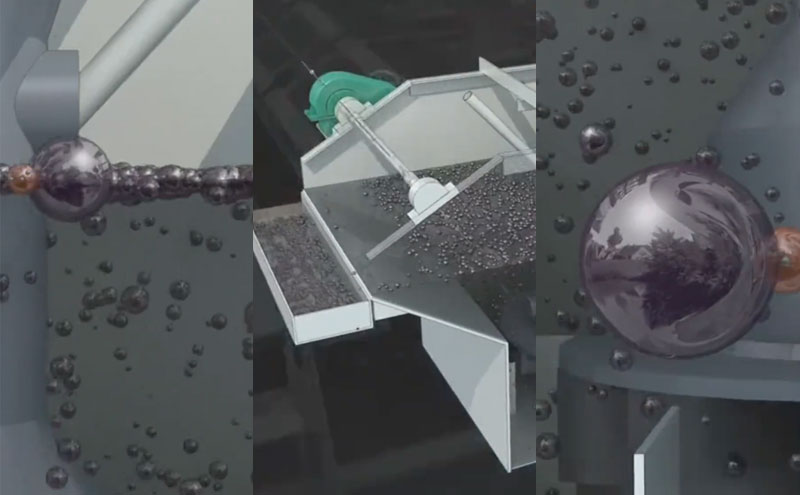
chat online
Phone
24-Hour Hotline
Inquire Now

TOP