Industry Knowledge
2026-09-02 11:38:46
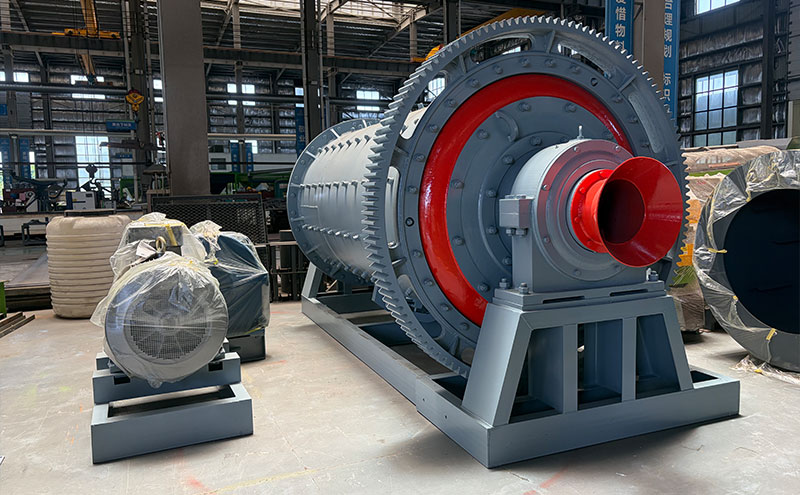
The selection of grinding mills generally follows these principles:
(1) Ensure production capacity. The selected grinding equipment must meet the specified production output while achieving the required grinding fineness. A margin should be included in the design capacity, typically using a safety factor of 1.15 to 1.20. Designs must account for variations in ore hardness and particle size; for instance, ore from deeper sections of a deposit often becomes harder or finer, so the selected mills must be capable of handling these changes while ensuring a smooth initial startup.
(2) Conduct grinding selection tests. When actual data is unavailable for the design, grinding tests are mandatory—especially for large-scale mineral processing plants. The resulting baseline data should be used to calculate mill selection and scale up the equipment.
(3) Prioritize large-scale equipment. Scaling up equipment size has been a key design trend in recent years. Large-scale equipment offers advantages such as lower total equipment mass, a smaller footprint, fewer production lines, reduced staffing requirements, and fewer auxiliary systems, all of which lead to lower investment and production costs. However, large-scale equipment places higher demands on operational and management expertise; even a slight drop in operational availability can reduce overall mineral processing output. Therefore, the stability and reliability of large-scale equipment are critical, necessitating comparative analysis during the design phase to select the most appropriate machinery.
(4) Select highly reliable equipment. Equipment with high operational availability and reliability should be chosen to minimize maintenance and downtime.
#MineOwner #MiningEquipment #MineralProcessingTech #BallMill #MineralProcessingEquipment
chat online
Phone
24-Hour Hotline
Inquire Now

TOP