Industry Knowledge
2026-09-30 16:28:03
In ore-crushing processes, crushing equipment is categorized into two main types—crushers and grinding mills—based on the operational method and the particle size of the crushed product. Crushers are used for the coarse-crushing stage; they typically handle large feed material and produce a relatively coarse output, generally 6 mm or larger (with less than 60% of the product being finer than 6 mm). A fundamental characteristic of these machines is that their working components do not come into direct contact with one another, maintaining a specific gap between them. Based on their crushing mechanisms and principles, crushers are classified into the following four types: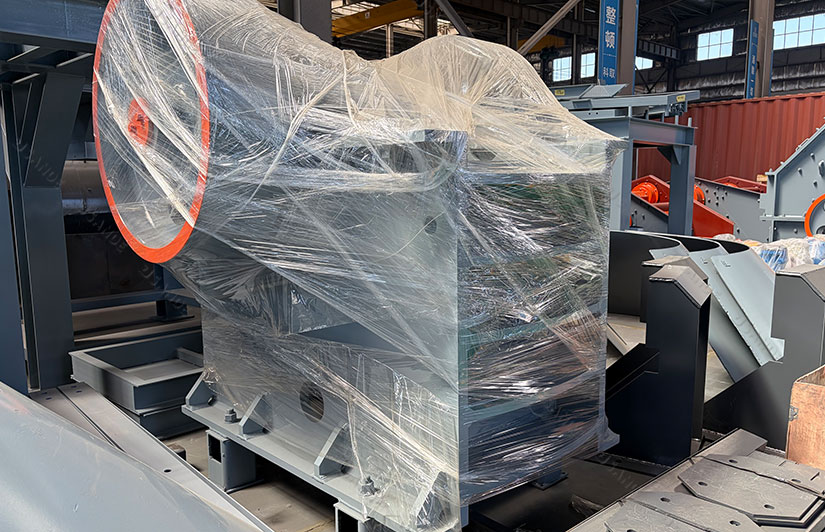
(1) Jaw crushers (sometimes colloquially referred to as "tiger-jaw" crushers) are a traditional and widely used type of crushing equipment. They operate by having a moving jaw plate periodically approach and retreat from a stationary jaw plate, crushing the ore trapped between them (primarily through compression). The crushed material is then discharged by gravity. These are classified as intermittent crushing equipment. Depending on the motion characteristics of the moving jaw, jaw crushers are further divided into "simple-swing" (double-toggle) and "complex-swing" (single-toggle) types.
(2) Cone crushers are classified as continuous crushing equipment. Based on the feed and product particle sizes, they are categorized into gyratory crushers (for primary crushing) and cone crushers designed for secondary (intermediate) or fine crushing. Furthermore, depending on the length of the "parallel zone" (the gap between the moving cone and the stationary cone/concave), they are classified as standard, intermediate, or short-head types.
Both gyratory crushers and jaw crushers are used for primary (coarse) crushing. However, because gyratory crushers operate continuously, they offer a significantly higher production capacity than jaw crushers when processing the same type of feed material. Standard and short-head cone crushers are typically used for secondary and fine crushing, respectively, while the intermediate type falls between the two—often serving as the second stage in a two-stage crushing circuit. (3) Impact crusher: This type of crusher employs the principle of "free" impact to break down ore. Inside the machine, the ore is subjected to a complex combination of forces, including impacts from striking elements (such as blow bars or hammers) and impact plates, as well as repeated collisions between the ore particles themselves. Characterized by a high reduction ratio, high efficiency, and minimal over-crushing (production of excessive fines), this type of crusher holds significant promise for future development.
(4) Roll crusher: Ore is fed from above into the space between two counter-rotating cylindrical rolls (which may have smooth or profiled surfaces). The material is drawn into the crushing zone by the friction between the ore and the roll surfaces, where it is crushed by the pressure exerted by the rolls. Once crushed, the ore falls through the gap between the rolls under the force of gravity. Roll crushers are primarily used for the intermediate and fine crushing of medium-hard and brittle materials.
chat online
Phone
24-Hour Hotline
Inquire Now

TOP