
Industry Knowledge
2026-10-19 17:04:08
The ore processed during mineral beneficiation consists of a mixture of particles varying in size and shape. To describe their dimensions and distribution, the concepts of "particle size," "size fraction," and "particle size composition" are introduced.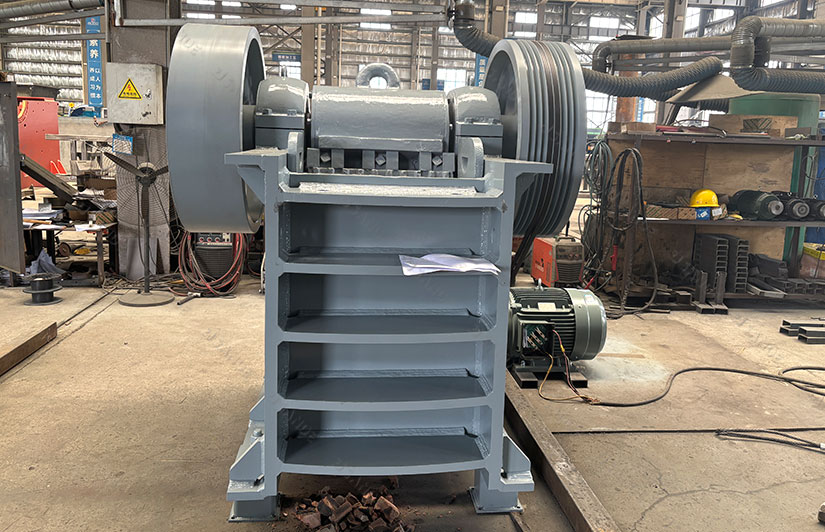
Particle size refers to the dimensions of ore fragments or particles. It is typically expressed as the average of measurements taken in different directions, or alternatively, by the maximum length of the particle; the units used are millimeters (mm) or micrometers (μm). If a mixture of ore particles is separated—usually via screening—into distinct, smaller size ranges, these ranges are referred to as "size fractions." A size fraction is generally defined by an "upper and lower limit"; for example, a 4.0–1.0 mm size fraction indicates that the particles in this category range from a maximum size of 4.0 mm to a minimum size of 1.0 mm. To characterize the particle size distribution of the material, the mass of each size fraction is determined (typically by weighing), and its mass fraction (relative content) within the total mixture is calculated. The set of these relative contents for all size fractions in the mixture is known as the "particle size composition."
chat online
Phone
24-Hour Hotline
Inquire Now

TOP