Industry Knowledge
2026-05-21 10:54:46
Key Advantages of the Grate-Type Ball Mill: Forced discharge, high throughput, minimal over-grinding, high ball charge capacity, high efficiency, and suitability for coarse grinding—making it the primary equipment for the first stage of mineral grinding.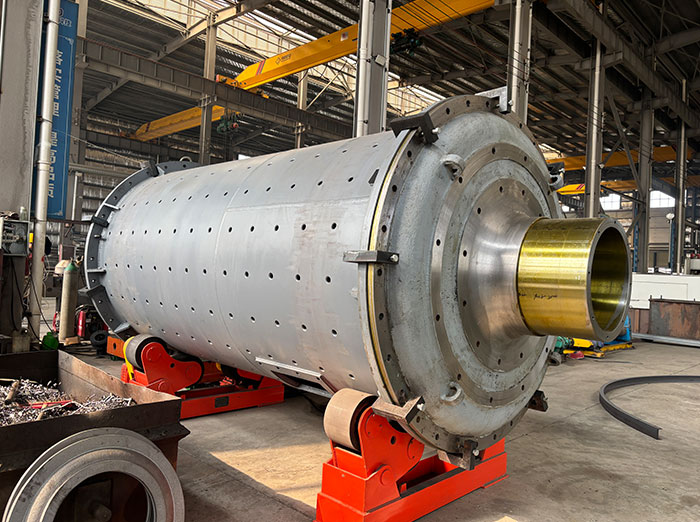
I. Forced Discharge, Higher Output (10%–25% Higher than Overflow Types)
The discharge end features a grate plate combined with sector-shaped lifters, enabling forced, rapid mineral discharge that does not rely on the pulp level within the mill.
The pulp level inside the cylinder remains low with minimal retention; qualified material is discharged promptly, preventing blockages and avoiding the "bloating" effect (excessive pulp accumulation).
For units of the same specifications, the processing capacity is 10%–15% higher than that of overflow-type mills, making it ideal for high-capacity production lines.
II. Minimal Over-Grinding, More Economical Grinding
Rapid discharge and short retention times reduce the over-grinding of fine particles, thereby lowering energy consumption and steel media wear.
The particle size distribution is more uniform, with an upper limit of 0.2–0.3 mm; this makes it highly suitable for coarse grinding or first-stage grinding, leading to improved efficiency in subsequent beneficiation processes.
III. High Ball Charge Capacity, Strong Crushing Force
The low pulp level allows for a higher steel ball charge (10%–20% more), resulting in intensified impact and grinding forces from the media.
The larger the cylinder diameter, the more effective the steel ball classification becomes (with a higher concentration of smaller balls toward the discharge end), ensuring more thorough grinding.
IV. Robust Structure, Stable Operation
The main bearings utilize double-row self-aligning spherical roller bearings, which feature low friction, easy starting, and energy savings of 10%–15%.
The grate plate features a design with tapered holes (wider on the outside, narrower on the inside) to prevent backflow and clogging, ensuring highly reliable continuous operation.
Large-diameter feed and discharge ports accommodate feed material up to ≤25 mm, ensuring smooth and unimpeded feeding.
V. High Adaptability, Specific Applications
Best suited for: Coarse grinding of metallic ores (such as iron, copper, and gold ores), sand and gravel aggregates, and cement raw meal.
Commonly employed as the primary equipment in a closed-circuit first-stage grinding system—typically paired with a spiral classifier—to achieve maximum grinding efficiency.
chat online
Phone
24-Hour Hotline
Inquire Now

TOP